
Ten Tips for Parents in the Digital Age
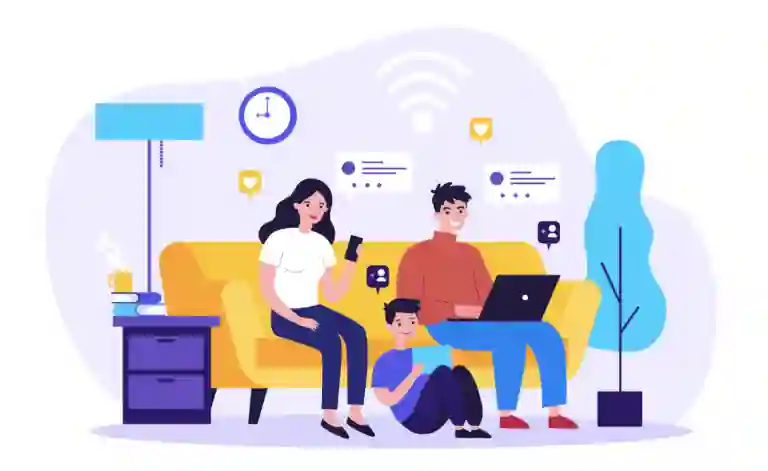
Currently, our children are growing and developing in a world where we are advancing more rapidly—a world different from the one we knew as parents: the digital world.
It is important to work hand-in-hand with our children to teach them good practices regarding the use of technology.
The family must be the facilitator of learning models for children at all stages of their growth, acting as a companion while also being the one to establish habits, usage rules, and content guidelines to provide control over them.
Parents must be clear that currently, technology and applications like Khartyare very powerful learning tools; furthermore, they allow our children to develop different skills.
Putting into practice the 10 tips for the digital age that all parents should know will facilitate this task:
- Families must know the technologies their children consume, as well as the information and media they receive:Parents must have a better understanding of the platforms where our children interact, how they communicate, what information they acquire, and the pros and cons of each, verifying if they correspond to our family values and, primarily, that they are not a distraction from activities such as family time and rest. It is also important to teach children that they should not provide personal data, send photographs, or interact with people they do not know.
- Establish limits and playtime:It is important for children to have technology-free time; likewise, outdoor games stimulate creativity. There is no magic formula for establishing reasonable limits on digital media use; it will depend on each child and their environment. Free time away from digital devices must be a daily priority, especially for the little ones.
- Family participation in games:It is important for children to learn by playing with their parents from a young age and also to learn about social interactions, sportsmanship, and basic behavioral rules when participating in activities like video games. When allowing children to use technology, let’s be participants in this learning and contribute our experiences.
- Kindness and good manners online:Being role models is important for children's learning and development, making them aware that they should provide respectful comments to others and treat them the way they want to be treated.
- Valuing face-to-face communication:When children are small, their capacity for wonder and reception of knowledge from their surroundings is greater and represents new knowledge. Maintaining face-to-face communication is important; furthermore, young children learn best when communication is two-way. Likewise, digital media such as video calls help bring children closer to family or friends who are traveling or live far away, but they should not replace face-to-face communication.
- Creating technology-free spaces:Establishing "tech-free" zones or spaces will help maintain a healthy relationship with devices and digital information consumption in children. Recommendations such as keeping mealtimes and social gatherings as technology-free spaces, as well as charging devices overnight outside of children's bedrooms, will allow us to create healthy habits for their well-being.
- Technology as an emotional pacifier:Using digital devices as a means for children to stop bothering us or to seek entertainment is a method widely used by parents today. By giving them a mobile phone or tablet, we think the problem is solved. However, we must find a way to manage children's emotions without the need for mobile devices to become a condition for rectifying an attitude.
- Apps for children:There are hundreds of applications labeled as educational, but it is important to conduct prior research on which are the best by age and educational content. Above all, teachers can be consulted to provide information on which ones can be used and which allow for learning for the children.
- Our children and their online environment:For children and especially adolescents who have grown up as digital natives, their environment is found in social networks and digital devices, this being the place where they establish connections. As parents, we must know how to handle this situation and teach the difference between the real world and the world transmitted on social networks, being responsible digital citizens and reminding them that platforms are not truly private and that all content shared or communicated becomes part of their digital footprint permanently.
- Prepare to face mistakes:As people, and especially as children, they are prone to making mistakes on their learning path. In the same way they make mistakes playing with friends, they can make mistakes "online," so we must be attentive to find ways to turn the mistake into a learning moment.
Knowing about digital media and devices is becoming increasingly important; they are an integral part of our daily lives. Using technology as an educational medium represents a great platform to expand children's knowledge.
Khartyis an application that allows our children to learn all their school content by playing in an interactive way. You will be able to supervise those exercises and make the most of the technological resources available to get much closer to your son/daughter.