Animal Cell Organelles
Description
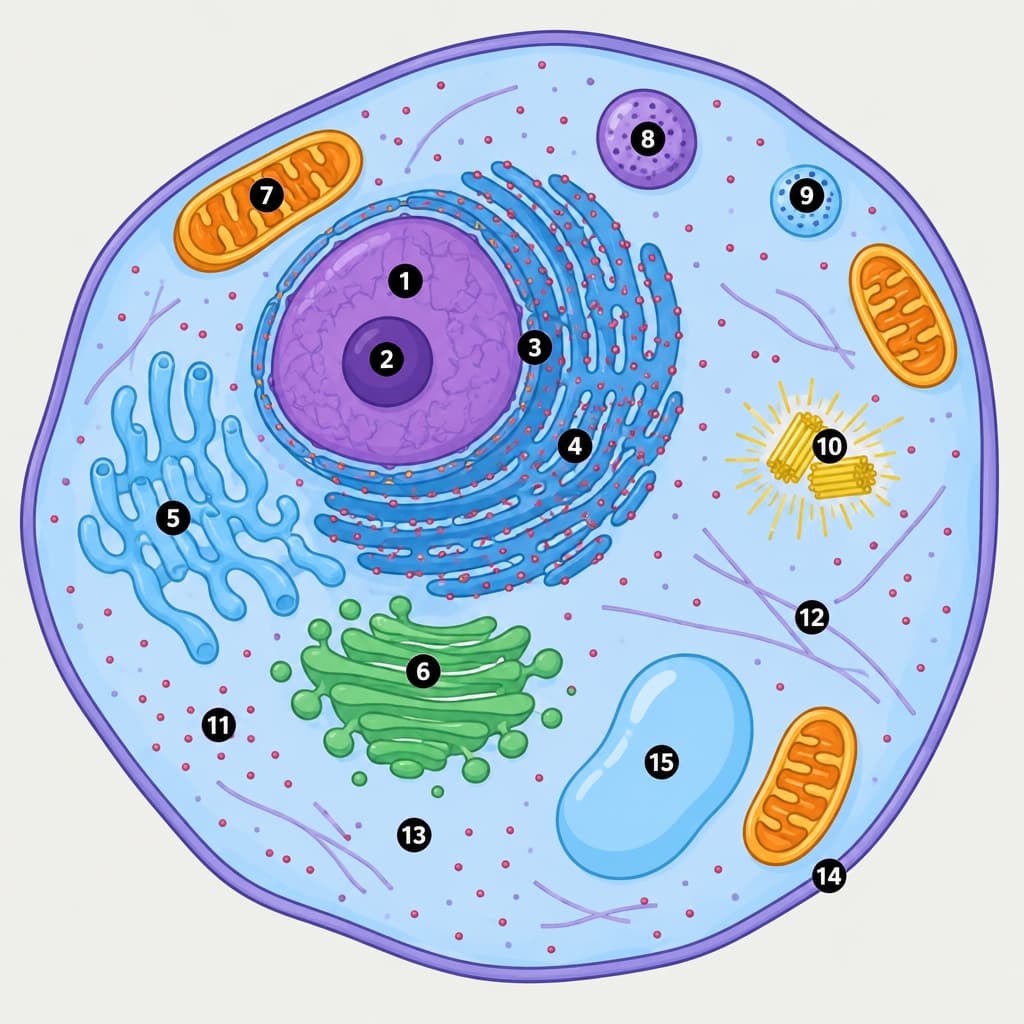
The major organelles and structural components of a eukaryotic animal cell.
- Nucleus: Membrane-bound organelle that stores genetic material and controls cellular activities.
- Nucleolus: Dense region inside the nucleus responsible for ribosome synthesis.
- Nuclear envelope: Double membrane perforated by pores that encloses the nucleus.
- Rough endoplasmic reticulum: Network of folded membranes studded with ribosomes involved in protein processing.
- Smooth endoplasmic reticulum: Tubular membrane system that synthesizes lipids, metabolizes carbohydrates, and detoxifies chemicals.
- Golgi apparatus: Stack of flattened cisternae that modifies, sorts, and packages proteins for secretion or delivery.
- Mitochondrion: Organelle that generates most of the chemical energy needed to power cellular reactions through aerobic respiration.
- Lysosome: Membrane-bound vesicle containing digestive enzymes to break down waste and cellular debris.
- Peroxisome: Metabolic organelle that breaks down fatty acids and neutralizes hydrogen peroxide.
- Centrosome: Microtubule-organizing center containing a pair of centrioles involved in cell division.
- Ribosomes: Complexes of RNA and protein that synthesize polypeptides.
- Cytoskeleton: Network of protein filaments and tubules that maintains cell shape and enables internal transport.
- Cytoplasm: Gel-like fluid and suspended components occupying the interior of the cell outside the nucleus.
- Plasma membrane: Phospholipid bilayer that encloses the cell and regulates the movement of substances in and out.
- Vacuole: Small membrane-bound sac used for temporary storage and transport of materials.
15 Terms
 More Science Khartys