Cardiovascular and Respiratory Systems
Description
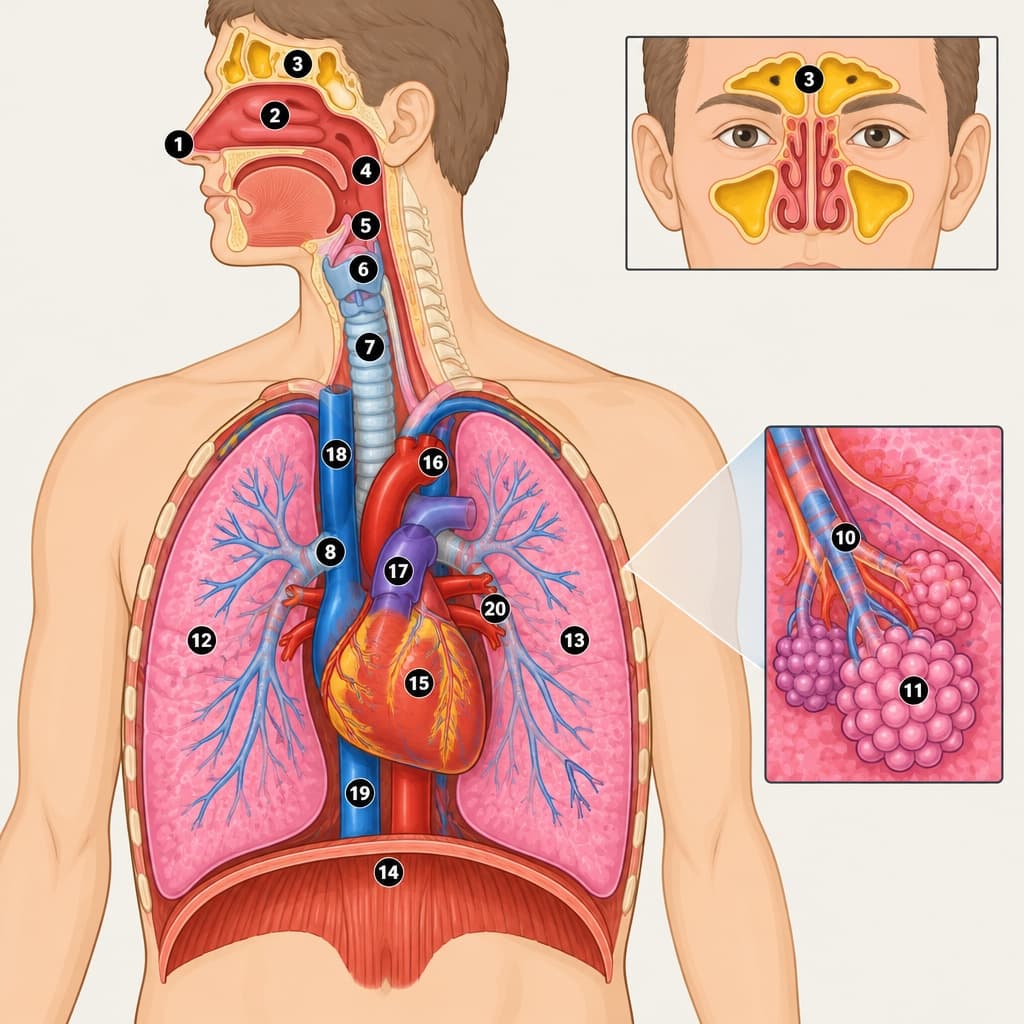
Major organs and vessels of the human cardiorespiratory system within the neck and chest cavity.
- Larynx: Cartilaginous structure situated superior to the trachea, containing the vocal folds.
- Trachea: Cartilaginous windpipe that conducts air from the larynx down into the bronchi.
- Right main bronchus: Wider, shorter, and more vertical primary bronchus leading into the right lung.
- Left main bronchus: Narrower, more horizontal primary bronchus leading beneath the aortic arch into the left lung.
- Right lung: Three-lobed respiratory organ responsible for gas exchange on the right side of the thorax.
- Left lung: Two-lobed respiratory organ accommodating the cardiac notch on the left side of the thorax.
- Diaphragm: Dome-shaped muscular sheet separating the thoracic and abdominal cavities, crucial for breathing.
- Heart: Four-chambered muscular organ that pumps deoxygenated blood to the lungs and oxygenated blood to the body.
- Aortic arch: Curved segment of the systemic arterial trunk distributing oxygen-rich blood from the left ventricle.
- Pulmonary trunk: Arterial vessel arising from the right ventricle that divides into left and right pulmonary arteries.
- Superior vena cava: Large vein draining deoxygenated blood from the upper body into the right atrium.
- Inferior vena cava: Large vein carrying deoxygenated blood from the lower body through the diaphragm into the right atrium.
- Pulmonary veins: Vessels carrying oxygenated blood from the lungs back to the left atrium of the heart.
- Epigotis: Epigotis
20 Terms
 More Anatomy Khartys